 Cabinet Water Guide
Look up cartridges and compare yearly costs
Open the printable cabinet-fit worksheet
Compare the models side by side
Decide where you want filtered water
An inline filter can send water through the kitchen tap’s cold-water path where the model supports that connection. A separate drinking-water faucet lets you choose between two outlets. A compatible dual-path tap gives each supply its own water path within one fixture.
Check the sink deck and access underneath
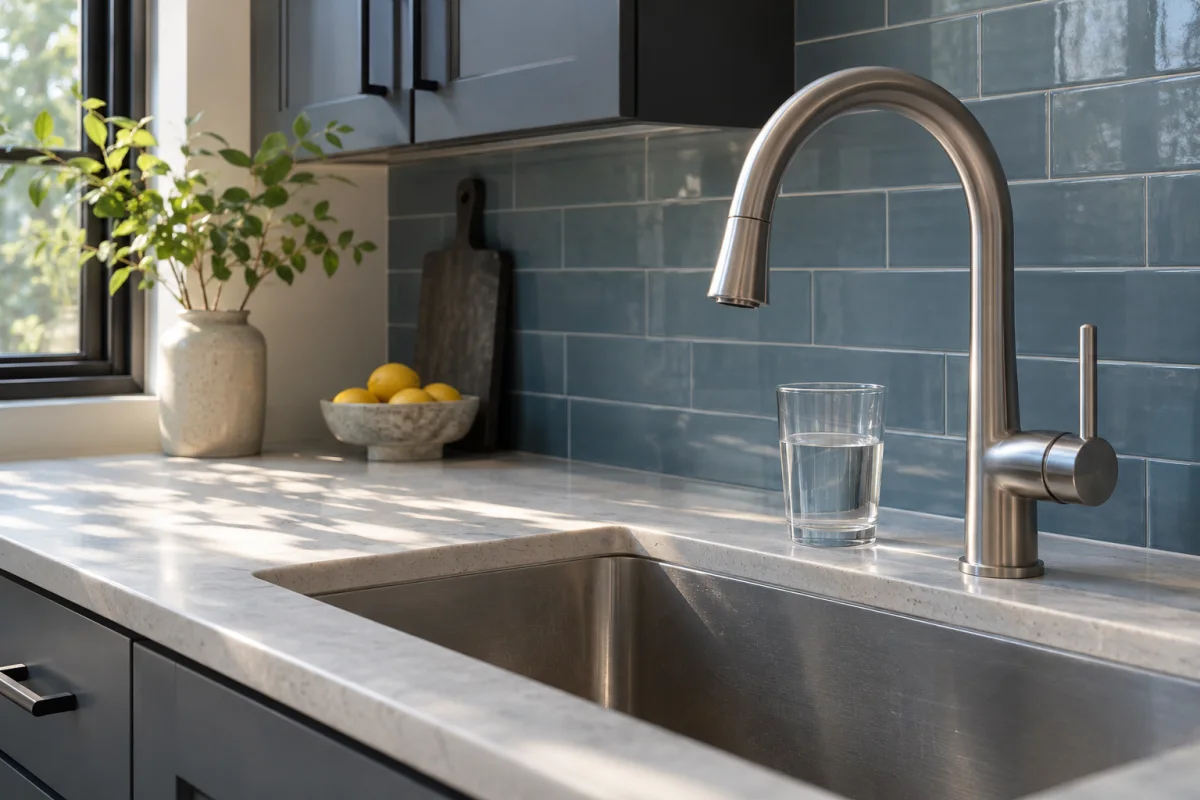
Look for an available mounting hole and check the faucet’s required hole diameter and maximum deck thickness. Confirm there is room under the sink to tighten the mounting nut and route the tubing. Ask about permission and installation before planning a new hole in a rental or stone worktop.
Match the model’s plumbing diagram
Check feed and outlet connector sizes and the required water pressure. A reverse osmosis unit also needs a route for its reject water. Some units require their own powered or monitored faucet. Confirm whether the exact model supports a different tap before ordering one.
Confirm which fittings ship in the box
Look up the parts list for your market and compare it with a photo of the cold-water shutoff and tap connections. Ask the seller to confirm any adapters and spare parts you will need for that model and installation.
Sources and notes
- Waterdrop G3P600 installation manual · Owner’s manual ·
- Aquasana AQ-6200, AQ-6300 and AQ-6300M owner’s manual · Owner’s manual ·
- Epic Smart Shield dimensions, connection and rated capacity · product listing ·
- EPA WaterSense guide to point-of-use reverse osmosis systems · Technical reference ·